
How to Unclog a Kitchen Sink Before Holiday Cooking Makes It Worse
Nissim, ClearX Drains ·
A slow kitchen sink is easy to ignore until the week everyone is cooking. In Montreal, that often happens in mid-November, when leftover gravy and roasting pans send a wave of grease down the drain, then the weather turns colder. If you need to know how to unclog a kitchen sink safely, start here. The steps below can clear many simple blockages. If not, call ClearX at (514) 809-5465.
Why a clogged kitchen sink shows up before the holidays
Kitchen clogs rarely arrive out of nowhere. Grease, cooking oil, meat drippings, soap and food scraps cling to the inside of the pipe. The drain still works, so it feels fine, until one heavy meal closes the last gap.
Here is the part that surprises many people: hot water does not make grease disappear. It only keeps the fat liquid long enough to travel further down the line. As soon as the mixture cools, it coats the pipe again. In a Montreal plex, that often happens in a cooler horizontal run inside a wall or under a basement ceiling, especially in older kitchens in the Plateau, Rosemont, NDG or Villeray.
Other common culprits include coffee grounds, rice, pasta, peels, eggshells and soap residue that binds with fat. If the dishwasher shares the line, a clog can show up as dirty water in the basin when the dishwasher drains. A garbage disposal only chops food into smaller pieces. It does not break down grease.
What not to do when the sink is clogged
Before you try to unclog a kitchen sink, skip the methods that create a bigger mess.
Skip chemical drain cleaners
Corrosive drain cleaners can sit in standing water, damage older pipes, and splash back when you plunge. They also make the job more hazardous if a technician later opens the line. If you have already poured a cleaner in, do not add another product, do not plunge, and tell the person who comes to help.
Do not dump a full kettle of boiling water into plastic pipes
Very hot water can help with a light grease film, but a rolling boil poured all at once is hard on common PVC traps and washers. If the sink is already full, boiling water only heats the standing water. It does not reach the clog.
Do not keep running the disposal or the dishwasher
A jammed disposal or blocked shared drain can push dirty water back into the sink. Stop adding water until you know where the blockage is.
If the sink is already full, or the clog keeps coming back
If water is sitting in the sink, both sides of a double basin are affected, or the clog keeps coming back, it may already be past a simple DIY fix. ClearX Drains can unclog a kitchen sink in Montreal and tell you if the restriction is in the trap or further in the pipe. Call (514) 809-5465, or request service.
How to unclog a kitchen sink, step by step
Start simple and stop as soon as the water starts to move, then flush with hot tap water.
1. Clear the strainer and standing water
Remove the strainer and scoop out food. If the basin is full, bail the water into a bucket so you can work on the clog, not a full sink.
2. Try hot water for a light grease film
If the sink is only slow, not fully stopped, pour hot tap water in stages, waiting about 20 seconds between pours. Use hot tap water rather than a rolling boil if the trap is plastic.
3. Plunge the drain, and seal the other openings first
This is the step most people get wrong. On a double kitchen sink, plug the other side tightly with a stopper or a wet cloth. Otherwise the pressure escapes and the plunge does almost nothing.
Use a sink plunger (a flat-bottomed cup, not a toilet plunger). Add enough water to cover the cup, keep a firm seal, and use short, strong strokes for 15 to 20 seconds. Lift away sharply and see if the water drops. Repeat if there is any improvement. Do not plunge if a chemical cleaner is still in the sink.
4. Use baking soda and vinegar only for a mild clog or odour
Pour about half a cup of baking soda down the drain, then half a cup of white vinegar. Cover the opening, wait 15 to 30 minutes, and flush with hot water. This can help with light residue and a sour smell, but it will not cut a solid grease plug.
5. Clean the P-trap
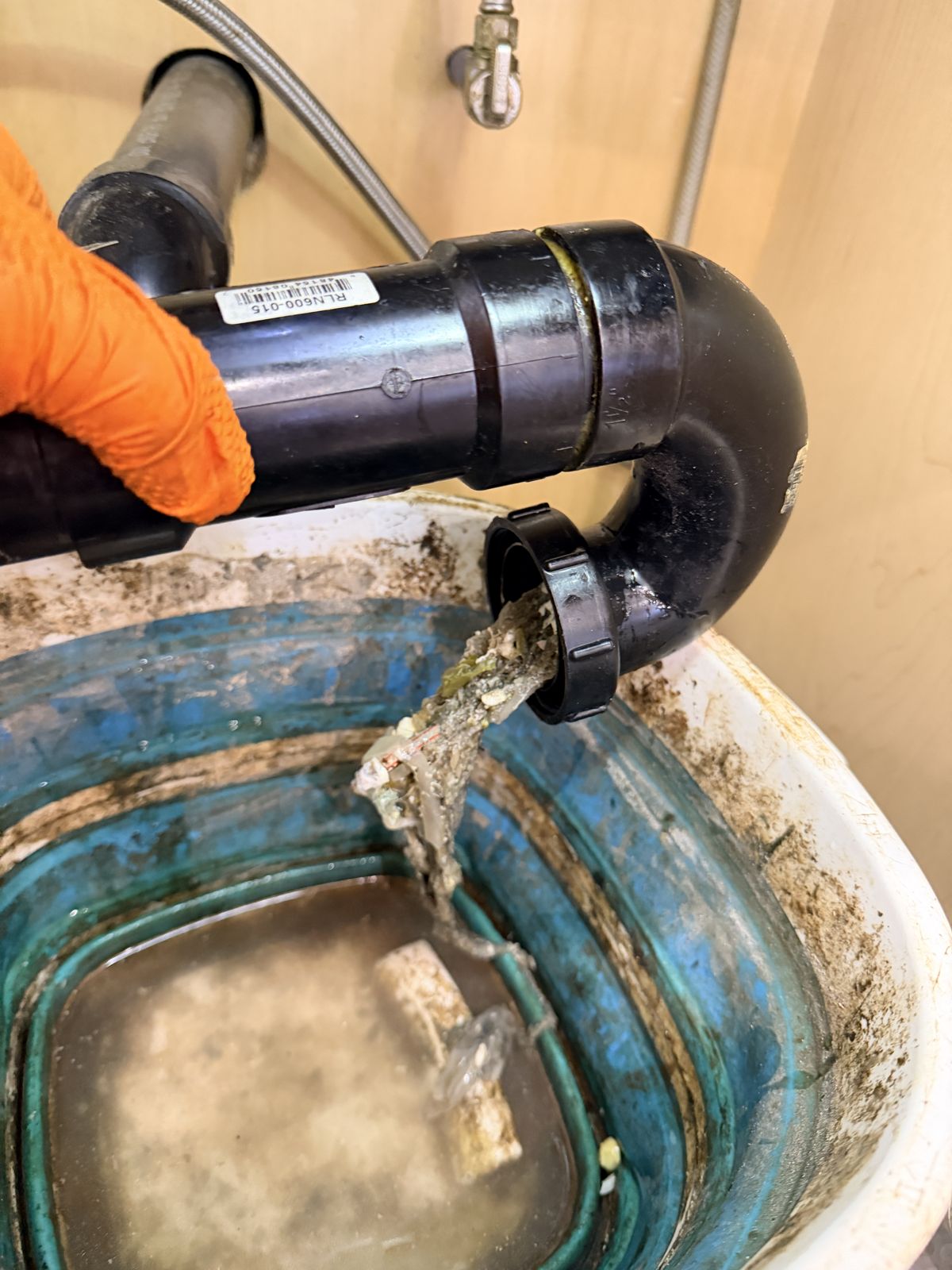
The P-trap is the U-shaped pipe under the sink. It holds water so sewer odours do not come up, and it is also where a lot of kitchen debris stops.
Put a bucket and towels underneath. Loosen the slip nuts by hand, or gently with pliers if they are tight. Lower the trap, empty it, and clean out the grease and scraps. Check the short arm that runs toward the wall as well. Reassemble, tighten the nuts firmly without cracking plastic, and run water while you watch for drips.
A dense, grey, greasy mass usually is the problem. If the trap is fairly clean and the sink still will not drain, the clog is further in the line.
6. Use a small hand snake, carefully
With the trap still off, feed a hand-crank drain snake into the pipe that goes into the wall, not down through the sink opening. Turn the handle as you advance. When you feel resistance, work the cable back and forth instead of forcing it. Pull it out slowly, wipe it, reattach the trap and flush with hot water.
If the cable keeps catching at the same point, or you cannot reach the blockage, stop rather than forcing an old fitting.
Signs it is time to call a professional
Call when:
The sink is completely stopped and the trap is already clean
Both sides of a double sink back up, or the dishwasher discharges into the sink
Other fixtures gurgle or slow down at the same time, which can point to a main drain blockage
The clog returns within days
You notice a sewage smell, overflowing, or water under the cabinet
You have already used a chemical cleaner
You would rather not open the pipes
A technician can snake the line or, when grease coats a longer stretch of pipe, discuss whether hydro-jetting is appropriate. Recurring clogs sometimes have a deeper cause, which is why a closer look at why drains stay blocked can help. For a serious overflow, call about emergency drain cleaning.
Keep grease out of the drain after you clear it
Let pans cool, then wipe fat into the garbage or a can before you wash
Catch scraps with a sink strainer and empty it often
Keep coffee grounds, rice, pasta and peelings out of the sink
If the sink starts to slow again, treat it as an early warning, not a new normal
These habits matter even more as holiday cooking picks up, from Laval and the West Island to downtown and the South Shore.
Still stuck? Call ClearX Drains
If these steps do not restore a steady flow, or you would rather not work under the sink, ClearX Drains can help with a clogged kitchen sink in Montreal. Call (514) 809-5465 during open hours (open 24 hours, closed Saturday), or send the details. If wastewater is overflowing, call rather than waiting on a form.
FAQ
How do I unclog a kitchen sink with standing water?
Bail out as much water as you can first. Standing water stops hot water or baking soda from reaching the blockage and makes plunging messy. Once the basin is mostly empty, seal the other side of a double sink and plunge. If that fails, clean the P-trap.
Why is my kitchen sink clogged after cooking?
Grease and pan drippings look liquid in a hot pan, then solidify as they cool inside the pipe. Holiday meals add a lot of fat in a short time, so a drain that was only a little narrow can stop suddenly.
Can I use baking soda and vinegar to unclog a kitchen sink?
Yes, for a mild slowdown or a lingering odour. It is not a reliable way to break a solid grease or food plug. If the sink is full and unmoving, go to the plunger or the P-trap instead.
Why does my dishwasher back up into the kitchen sink?
The dishwasher and the sink usually share a drain. When that line is restricted, the dishwasher’s discharge comes back into the sink. Clearing only the strainer will not fix a blockage in the shared pipe.
When should I stop DIY and call ClearX?
Stop if the trap is clean and the sink still will not drain, if more than one fixture is affected, if the clog returns, or if a chemical cleaner is already in the line. Call ClearX Drains at (514) 809-5465.