Sewer Camera Inspection Before Buying a House in Montreal: What the Camera Sees That You Can't
Nissim, ClearX Drains ·
A house, plex or condo can look perfect on visit day and still hide a cracked, root-filled or sagging pipe under the basement floor. A sewer camera inspection before buying a house is the simplest way to see the inside of that line before you commit. This guide explains what a standard home inspection usually leaves out, what the camera finds, which Montreal properties deserve a closer look, and how to fit the inspection into your offer. Questions along the way? Call ClearX Drains at 514-809-5465.
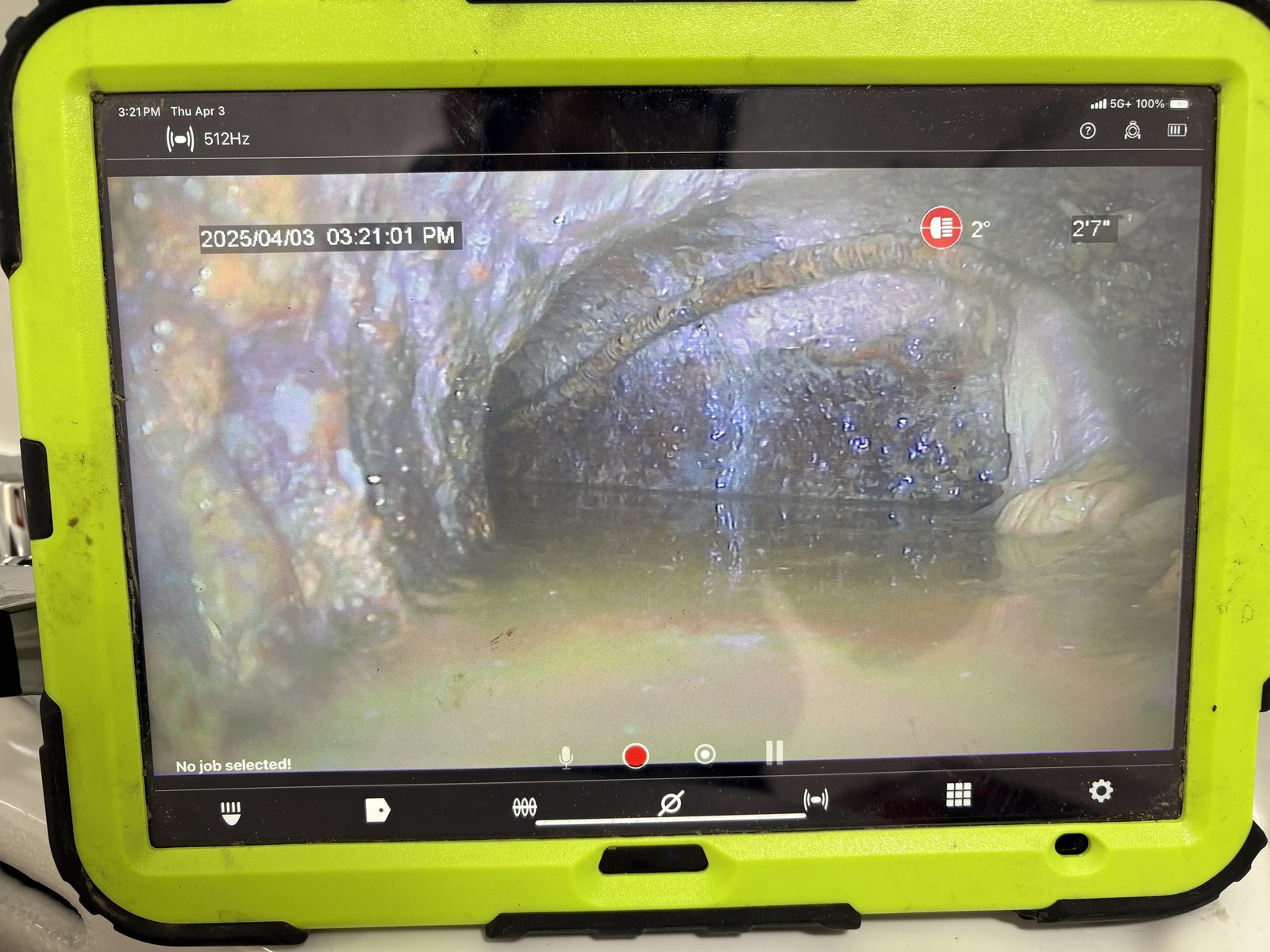
The photo above is a real view from one of our camera inspections: an older drain line with rough walls and standing water, the kind of detail nobody sees from the basement.
Why a sewer camera inspection before buying a house matters
The sewer line is one of the few parts of a property you can't look at during a visit. It leaves the building under the floor, runs under the yard and connects to the city sewer under the street. When it fails, the symptoms (backups, slow drains, sewage smells) usually show up after you've moved in.
Here's the part that surprises many buyers. In the City of Montréal, owners are responsible for the maintenance, replacement and repair of their building's entire sewer connection, right up to where it joins the municipal sewer under the street. The City gives cutting roots and unblocking the connection as examples of the owner's responsibility, even under public property. The City only steps in for structural problems on the public part, and only under certain conditions (source: Ville de Montréal). If the property is in another municipality, such as Westmount, Laval or Longueuil, check that city's own rules.
In other words: once you buy, that pipe is yours to look after.
Does a home inspection include the sewer line?
Usually not in any depth. In Québec, pre-purchase inspections follow the BNQ 3009-500 standard, which is built around a careful visual examination of the systems and components that can be observed (BNQ). A buried sewer line isn't observable. A good inspector may flag a stain, an odour or signs of a past backup, but can't tell you whether the pipe is cracked 12 metres from the foundation.
A sewer scope inspection fills that gap. It doesn't replace your home inspector; it covers what they can't see.
What a sewer scope inspection can find
A waterproof camera on a flexible cable travels through the line and shows the inside of the pipe on a monitor. Depending on access and visibility, it can reveal:
Tree roots that got in through a joint or a crack and catch everything that flows past
Cracks and broken sections, often in older pipe
Bellies or sags, low spots where water and waste sit instead of flowing
Offset joints, where two pipe sections no longer line up and create a ledge
Old clay or cast iron pipe, which can show wear, scale or corrosion with age
Grease and buildup that narrow the passage
Collapsed or crushed sections
Foreign objects stuck in the line
The camera also shows how far along the line each issue is, which helps target any repair instead of guessing. See what our sewer camera inspection service covers.
One thing a camera can't do: see through the pipe wall. Murky water, heavy buildup or a tight bend can limit the view. When that happens, we tell you what we could and couldn't see rather than guess.
Which Montreal properties are most at risk?
Any property can have a sewer problem, but these deserve a closer look:
Older plexes and row houses in neighbourhoods like the Plateau-Mont-Royal, Rosemont, Villeray, Verdun and Hochelaga, where original pipes may still be in service
Streets with mature trees, common in NDG, Ahuntsic and Outremont, since roots look for water and get in at joints and cracks
Properties with a history of sewer backups or a finished basement that's been redone after water damage
Buildings with a basement bathroom, laundry or floor drain, which are lower than the street and more exposed to backups
Homes where nobody knows when the line was last cleaned or inspected
Don't forget the backwater valve. The City of Montréal says backwater valves have been required in all new buildings since 2011, and are mandatory under the municipal by-law if a building has had a flood or sewer backup. The City recommends checking them about twice a year, and warns that some are installed in the wrong place, worn out or hidden under new flooring (source: Ville de Montréal). During your visit, ask where the valves are and whether they're accessible. Our backwater valve services page explains what we check.
Buying in Montreal? Book your pre-purchase sewer inspection early in your conditional period. Call ClearX Drains at 514-809-5465.
When to book a pre-purchase drain inspection in Montreal
Timing is everything. Most offers include an inspection condition with a set deadline. Book the camera inspection so the results arrive before that deadline, ideally the same week as your home inspection. Waiting until after the conditions are lifted leaves you fewer options.
Practical tips for booking:
Call as soon as your offer is accepted, so the date fits your deadline.
Ask the seller's broker for access to the basement and the cleanout (the capped opening on the main drain).
Make sure the cleanout is reachable, not behind a finished wall or under flooring.
Ask the seller for history: past backups, root cutting, sewer repairs or previous camera reports.
How a sewer line inspection before buying a house works
Access. The technician opens a cleanout on the main drain, usually in the basement.
Camera run. The camera head is pushed down the line toward the street while you watch the live image on the monitor.
Locating. If something needs attention, the camera's position can be traced from above so the spot can be marked.
Findings. We explain what we saw, where it is and what it could mean: fine as is, keep an eye on it, or have it cleaned or repaired.
If the line is too dirty to see clearly, it may need cleaning before the camera can do its job. That's a job for our sewer line cleaning team, not a DIY project. We never recommend renting a snake or auger before a purchase: it isn't your pipe yet, and it can make things worse.
What you get, and how to use it
You get a plain-language summary of what's fine, what needs attention and what can wait, with the distance to each issue. Ask for the recorded footage too, so you can share it with your broker, a contractor or your insurer.
How you use the findings is between you, your broker and, if needed, your notary. In general, buyers use a camera report to:
Ask the seller to have the line cleaned or repaired before the sale
Get a quote for the work so everyone is talking about real numbers
Plan and budget for work after closing
Walk away if the condition is a deal-breaker for them
This isn't legal advice; your broker can explain what your offer allows.
Learn more about our pre-purchase sewer inspection and, if roots or a blockage show up, our root removal and main drain blockage services.
Tips for buyers before you sign
Look for clues during the visit: water stains near the floor drain, a musty smell, fresh paint or new flooring in one corner of the basement.
Run the water. Flush toilets and run sinks and the shower together. Gurgling or slow drains can point to a problem further down. (If you end up with a slow shower after you move in, see our clogged shower drain guide.)
Buying a condo? Ask the syndicate for any records of drain cleaning, camera inspections or sewer backups in the building.
Buying a plex? Ask every unit about slow drains or past backups; a problem in a shared line can show up in more than one home.
Keep the report. It becomes your baseline for future maintenance.
Ready to check the pipe before you buy? Call ClearX Drains at 514-809-5465 and tell us your inspection deadline.
FAQ: sewer camera inspection before buying a house
Is a sewer camera inspection worth it before buying a house? For most older Montreal homes and plexes, yes. The line is hidden, the owner is responsible for it all the way to the street in the City of Montréal, and the camera shows its condition before you commit.
Does a standard home inspection include a sewer scope? Not usually. Québec pre-purchase inspections focus on observable components, and a buried sewer line isn't observable. A camera inspection covers that gap.
When should I book it? As soon as your offer is accepted, so the results arrive before the inspection condition deadline in your offer.
How long does a pre-purchase sewer inspection take? It depends on the length of the line, access and how clean the pipe is. Call ClearX at 514-809-5465 and we'll tell you what to plan for.
What if the camera finds a problem? We explain what we saw and where. You can then talk with your broker about next steps, such as asking for repairs, getting a quote or planning the work after closing.